

Chabad Presents a weekend of Hasidic thought and melody
Jewish Herald Voice; December 11, 2003, pg. 16On the weekend of December 12-13 Chabad Lubavitch Center will host a Shabbaton weekend with scholar in residence, Rabbi Moishe New of Montreal and conclude with a heartfelt concert with Simply Tsfat on Saturday night at 9:00 pm.
“The Shabbaton weekend is open to the entire community” says Rabbi Chaim, the program director for Chabad Lubavitch Center, “and pursuant to our goal to reach every unaffiliated Jew, the lectures and concert will be offered free of charge”.
 In 1991, Rabbi Moishe New along with his wife Nechama established the Montreal Torah Center which has since emerged as one of the city's most popular community centers for young and old. A popular speaker, to general and academic audiences, Rabbi New has lectured throughout North America and abroad.
Rabbi New will speak following services at the Chabad Lubavitch Center on Friday night and Saturday. On Saturday night at the concert he will address the topics: Passion Rekindled – A Biblical narrative, as explained in the Kabbalah, holds the secret to rediscovering passion in marriage; Anti-Semitism – Will it ever end?; The Princess and the Peasant – What our bodies really desire.
Simply Tsfat are a group of musicians from the Hasidic community in Tsfat, Israel. A town located in the northern Galilee, Tsfat is famous for its mountain air and Jewish mysticism.

Simply Tsfat fuses together heaven and earth through music. Tours of North and Central America have attracted audiences from all ages and backgrounds. The unique presentation of Simply Tsfat isnspirational, with stories, personal anecdotes and teachings all interwoven with powerful lyrics and enchanting music inherited from an authentic tradition handed down throughout generations.
The 19th day of the Hebrew month of Kislev this year, Sunday, Dec. 14) is celebrated as the Rosh Hashanah of Hassidism. It was on this date, in the year 1798, that the founder of Chabad Chassidism, Rabbi Schneur Zalman of Liadi (1745-1812), was freed from his imprisonment in Czarist Russia. More than a personal liberation, this was a watershed event in the history of Chassidism, heralding a new era in the revelation of the "inner soul" of Torah.
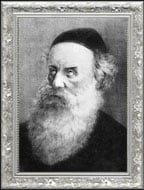 The public dissemination of teachings of Hassidism had in fact begun two generations earlier. The founder of the Hasidic movement, Rabbi Israel Baal Shem Tov (1698-1760), revealed to his disciples gleanings from the mystical soul of Torah which had previously been the sole province of select Kabbalists in each generation. This work was continued by the Baal Shem Tov's disciple, Rabbi DovBer of Mezeritch (d. 1772). But Rabbi Zalman went much farther than his predecessors, bringing these teachings to broader segments of the Jewish population of Eastern Europe. More significantly, Rabbi Zalman founded the Chabad approach - a philosophy and system of study, meditation, and character refinement that made these abstract concepts rationally comprehensible and practically applicable in daily life.
In its formative years, the Hasidic movement was the object of strong, and often venomous, opposition from establishment rabbis and laymen. Even within the Hasidic community, a number of Rabbi Zalman's contemporaries and colleagues felt that he had gone too far in “tangibalizing” and popularizing the hitherto hidden soul of Torah.
In the fall of 1798, Rabbi Zalman was arrested on charges that his teachings and activities threatened the imperial authority of the Czar, and was imprisoned in an island fortress in the Neva River in St. Petersburg. In his interrogations, he was compelled to present to the Czar's ministers the basic tenets of Judaism and explain various points of Hasidic philosophy and practice. After 52 days, he was exonerated of all charges and released.
Rabbi Schneur Zalman saw these events as a reflection of what was transpiring Above. He regarded his arrest as but the earthly echo of a Heavenly indictment against his revelation of the most intimate secrets of the Torah. And he saw his release as signifying his vindication in the heavenly court. Following his liberation on Kislev 19, he redoubled his efforts, disseminating his teachings on a far broader scale, and with more detailed and "down to earth" explanations, than before.
Kislev 19 therefore marks the "birth" of Hassidism: the point at which it was allowed to emerge from the womb of mysticism into the light of day, to grow and develop as an integral part of Torah and Jewish life.
Chabad Lubavitch has serviced th Jewish communities of Texas for over 30 years with social services, outreach and educational programs such as these. For more information or to RSVP, please call 713/777-2000, email [email protected] or visit the Web site at www.chabadtexas.org.